

 Design
  Residential
  Commercial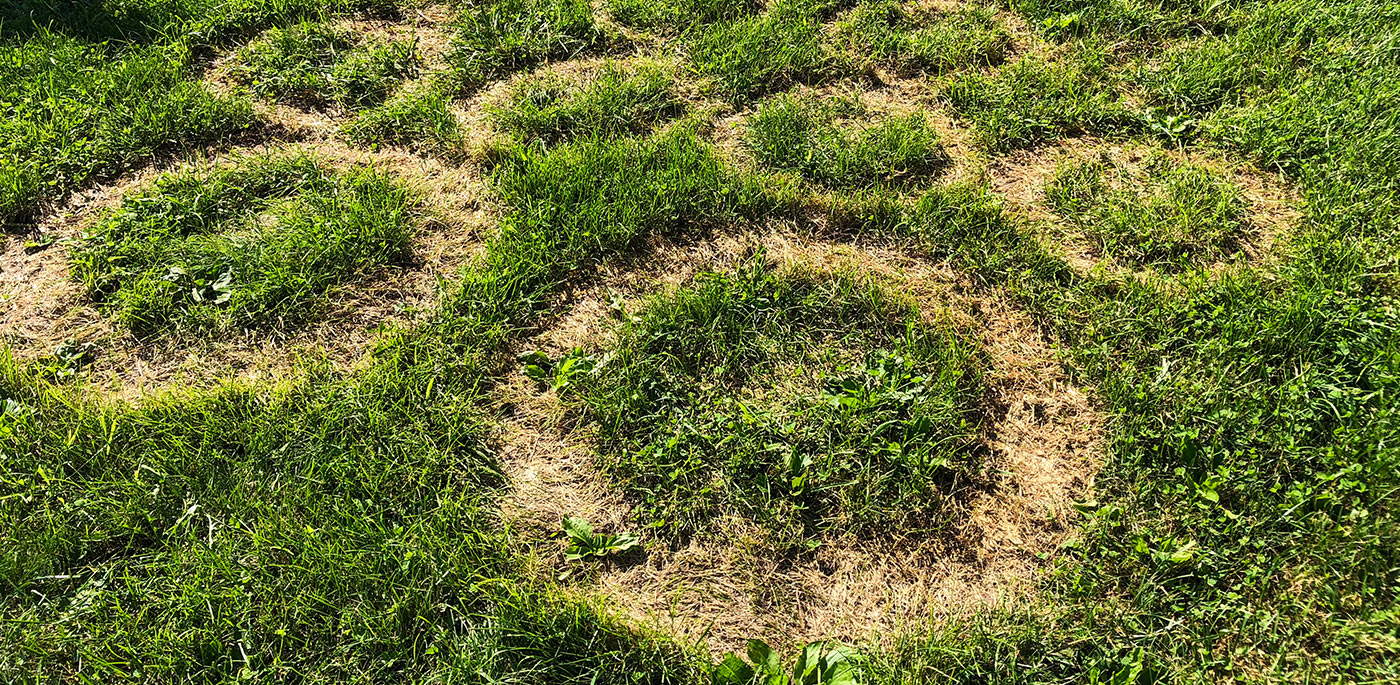


If you see rings on your lawn that resemble a frog's eye, it could be Necrotic Ring Spot.
This is a serious turf disease that mainly targets Kentucky bluegrass and other blends that contain a lot of bluegrass. Unlike many cosmetic issues, this one can stick around for more than one season if it's not addressed the correct way.
What is Necrotic Ring Spot?
Necrotic Ring Spot is a root and crown disease caused by a fungus that infects grass below the surface. Instead of only spotting the leaves, it damages the tissue that feeds and supports the plant.
Key points:
Kentucky bluegrass can be very attractive, but certain varieties are more prone to Necrotic Ring Spot. Mixing it with other cool-season grasses can improve resilience.
- It is most common on Kentucky bluegrass lawns
- It often appears on lawns that are 2 to 8 years old
- It develops in the root zone, not just on the leaf surface
Because it attacks roots and crowns, Necrotic Ring Spot recovery takes time and usually requires more than a quick product application.
How to recognize Necrotic Ring Spot
Necrotic Ring Spot has a few classic patterns:
- Rings or arcs on dead or thinning grass
- "Frog-eye" patterns in which the center of the ring is green and the ring around it is brown
- Infected patches range from a few inches to several feet long
Early on, affected grass may be light green or wilted. Over time, the rings become more obvious as the affected turf eventually thins and dies while the surrounding grass stays healthier.
When the disease often shows up:
- When temperatures are warm
- When the turf has shallow roots
- When the soil stays wet or is compacted
Once present, rings can fade in and out from year to year but tend to reappear in the same general areas unless the underlying issues are addressed.
How it differs from other ring problems
Several issues can create rings or spots on a lawn, so it is easy to misidentify what you are seeing.
When what you see is probably Necrotic Ring Spot:
- The lawn has a lot of Kentucky bluegrass
- Rings or arcs recur in the same area for more than one season
- The damaged grass is loose with weak or rotted roots
What else it could be:
- Dog spots—those small yellowish patches where pets urinate
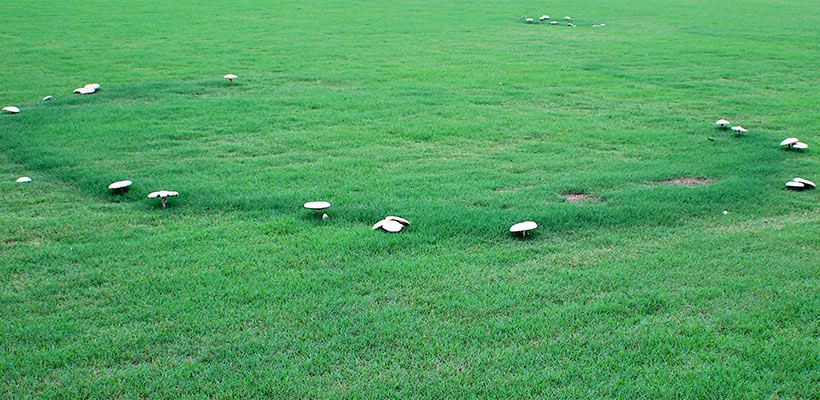
- Fairy ring, which can cause dark green rings, mushrooms, or hydrophobic soil
- Summer Patch, another root disease that also affects bluegrass
From the surface, these can be hard to separate. In many cases, a professional diagnosis, or lab confirmation is needed to be certain.
Necrotic Ring Spot is a root and crown disease caused by a fungus that infects grass below the surface. Instead of only spotting the leaves, it damages the tissue that feeds and supports the plant.
Why Necrotic Ring Spot shows up
The fungus that causes Necrotic Ring Spot is more active when conditions in the root zone favor it and stress the grass. Common contributors:
- Heavy thatch that holds moisture and heat around the crowns
- Compacted soil that limits root growth and oxygen
- Excessive or frequent watering that keeps roots in wet soil
- High-nitrogen fertilization in late spring that promotes soft top growth
- Shallow rooting from poor cultural practices
In short, turf that is pushed hard above ground, but weak below ground, is more vulnerable.
What you can do right now
If you suspect Necrotic Ring Spot, there are four useful steps you can take before you turn to fungicides.
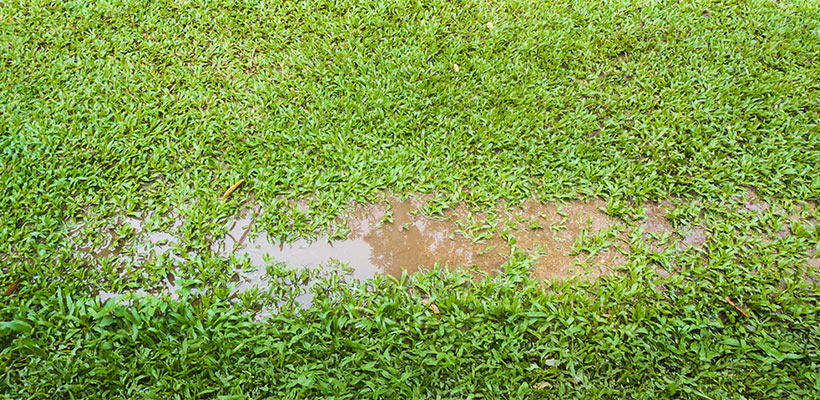
1. Adjust watering
Focus on infrequent deep watering rather than frequent shallow cycles.
- Water in the early morning
- Allow the surface to dry between waterings
- Avoid overwatering in cool or cloudy stretches
Drying the surface while keeping the deeper soil moist helps the roots. It also makes conditions less prone to the disease.
2. Review fertilization timing
Necrotic Ring Spot often flares when turf is heavily fertilized in late spring because it encourages lush growth on a stressed root system.
Helpful adjustments:
- Avoid heavy nitrogen applications in late spring and midsummer
- Emphasize fall fertilization to build root strength
- Use moderate rates that support steady growth rather than big surges
A good fall program is one of your best tools for long-term improvement.
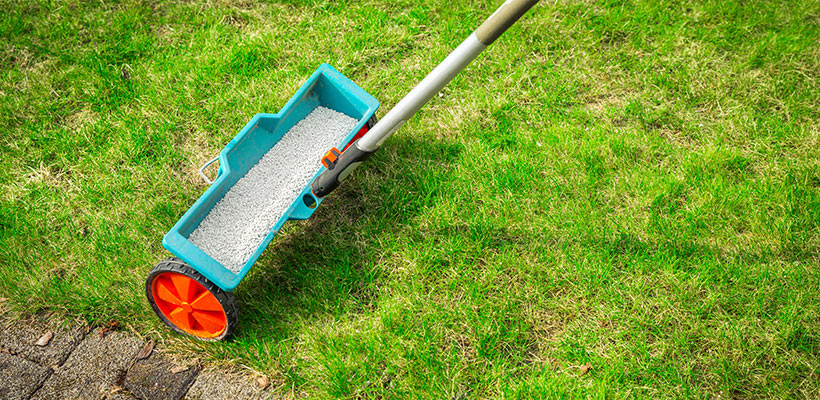
3. Relieve compaction and reduce thatch
Core aeration is important for lawns with this issue
- Aerate in the appropriate season to open the soil and improve air flow and water movement
- If the thatch is thick, reduce it gradually so as to help remove the warm wet layer where the fungus thrives
Aeration is not a quick cure, but it is a key component to recovery.
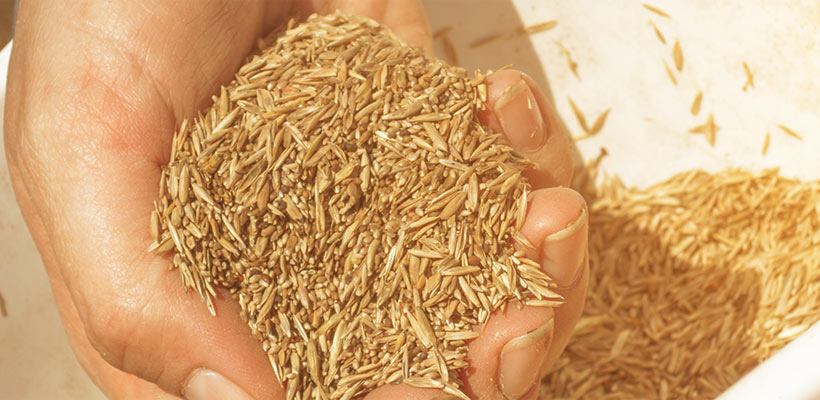
4. Overseed with more tolerant grasses
Kentucky bluegrass can be very attractive, but certain varieties are more prone to Necrotic Ring Spot. Mixing it with other cool-season grasses can improve resilience.
In many cases, here's how overseeding damaged areas with improved bluegrass cultivars and turf-type fescues can help:
- Breaks up uniform strands of susceptible grass
- Increases diversity and disease-tolerance
- Speeds up visual recovery in thin spots
Fall is usually the best window for overseeding in northern Illinois.
What about fungicides?
Fungicides can play a role with Necrotic Ring Spot, but they are not stand-alone fixes and timing is critical.
Points to keep in mind:
- Preventive fungicide applications are usually more effective than curative ones
- Treatments often need to target the root zone, not just the leaves
- Poor timing or inconsistent applications can lead to limited results
Because of cost and complexity, using fungicide for this disease is usually best planned and managed by a lawn care professional, not as a do-it-yourself remedy. Even when fungicides are used, cultural practices like aeration, watering changes, and overseeding are still essential.
When to call for help
Necrotic Ring Spot is not a simple one-season problem. It can look similar to other issues. Contact a professional if you see the following:
- Recurring rings or frog-eye patches in Kentucky bluegrass areas
- Weak turf that does not respond to the appropriate care
- Patterns that reappear in the same zones year after year
What LawnCare by Walter can do:
- We'll confirm whether or not your lawn is infected with Necrotic Ring Spot
- We'll combine cultural changes, overseeding and fungicide when needed
- We'll consider weather, soil and turf types when coming up with a plan
Necrotic Ring Spot can be stubborn, but it is not unbeatable. With patience, wise cultural practices, and long-term care, you can gradually soften those rings, strengthen your lawn, and bring back a healthier yard.
 Max 6 min read