

 Design
  Residential
 Commercial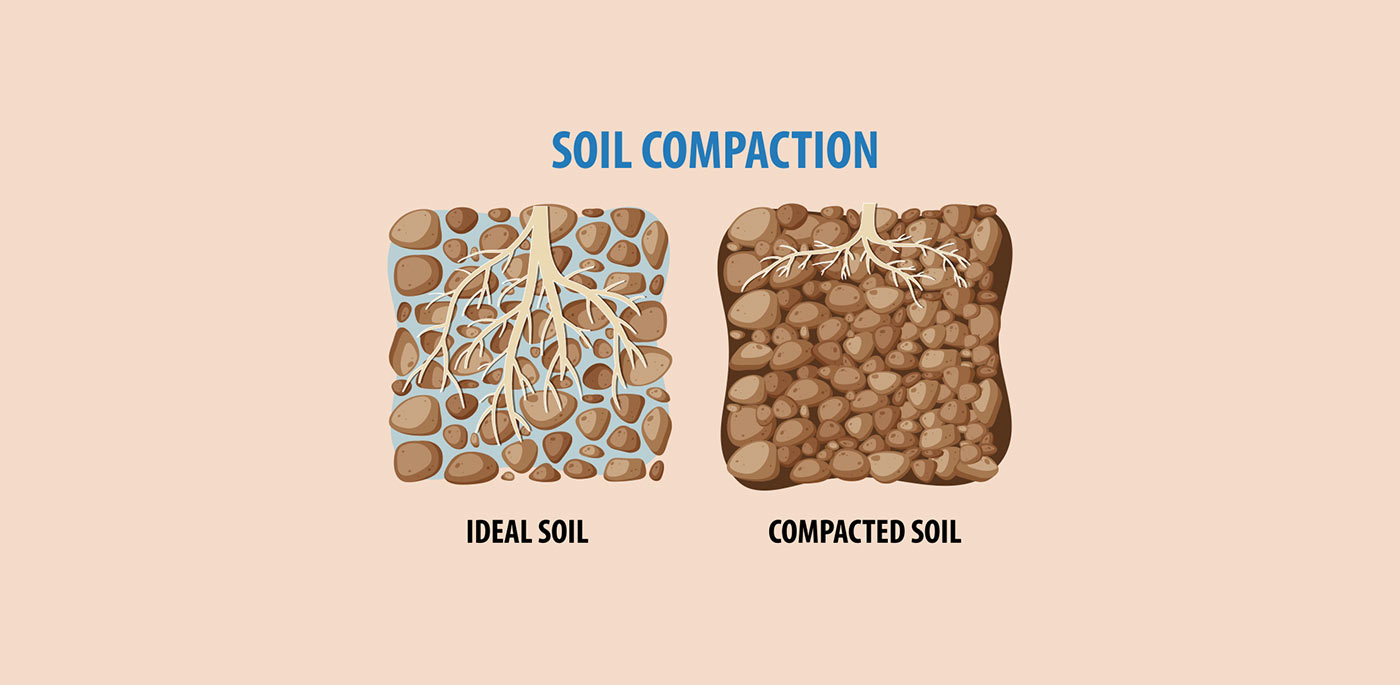


By the time winter winds down in northern Illinois, your lawn has taken a beating. Snow piles, frozen ground, plow passes, and people cutting across the yard all leave their mark. You might not see it under the snow, but the soil underneath can end up packed pretty tightly. That is referred to as Soil Compaction and it tends to show its unattractive self in late winter/early spring. If you know what to look for now, you can make better decisions about when to step on the lawn, when to stay off it, and how to plan for recovery in the coming season.
How winter creates compaction:
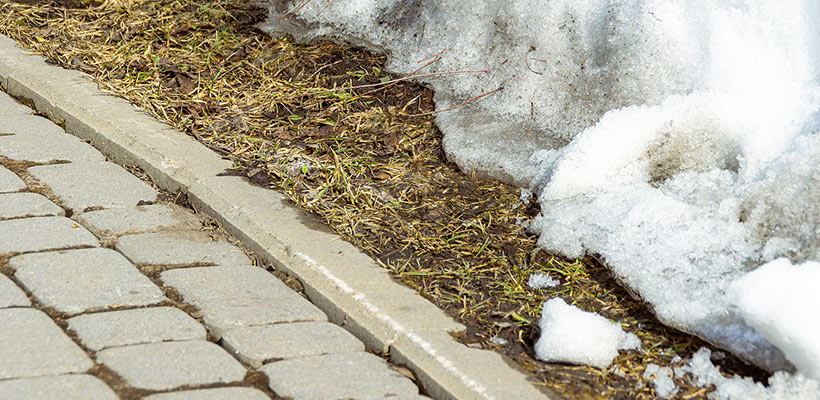
Even if you never park a car on the grass, winter does plenty of compacting on its own. Common culprits are often attributed to a variety of factors:
- Heavy snow piles pushed into the same spots all season
- Foot traffic and pet traffic on frozen or partially thawed turf
- Plow blades riding low and scraping turf edges
- Repeated freeze-and-thaw cycles that settle soil
When the ground is frozen, soil particles are locked into place and any weight will get transferred into the crowns and roots. When the surface thaws—but the deeper soil is still firm—walking on that soft top layer acts like a wet sponge, squeezing water out of it. Over time, pore spaces close and the soil becomes dense. You will not notice much in January, but you will definitely notice it in spring when your lawn does not respond the way you want it to.
Early signs of compaction as snow melts:
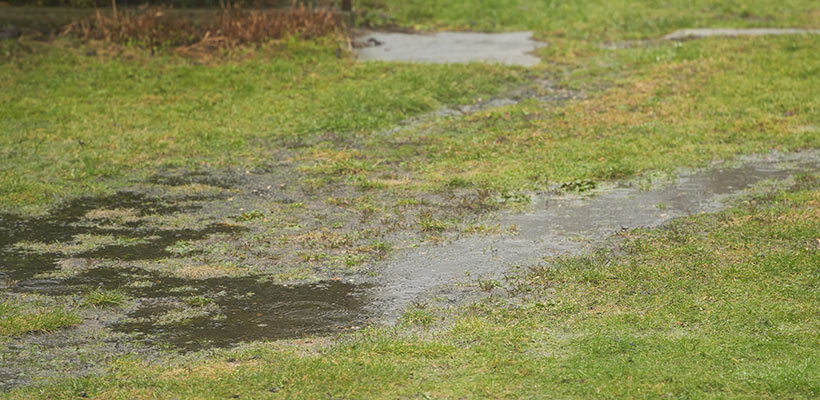
As the snow recedes and the lawn reappears, watch for clues that soil is firmer than it should be. Common signs can include the following:
- Water that sits on the surface instead of soaking in
- Sloppy, muddy areas that stay wet for a long time
- Turf that feels flat and hard underfoot, not springy
- Thin grass along driveways, walks, and main traffic paths
Try the screwdriver test once the ground is thawed. Take a long screwdriver and push it down into the soil. In relatively healthy soil, it should slide in with steady pressure. In compacted spots, it will stop quickly or be difficult to push more than an inch or two into the ground. Edges where snow was piled, corners where vehicles turned, and shortcuts that people took all winter are usually the cause of this.
Why late winter and early spring compaction matters:
Compacted soil this time of year sets the tone for the rest of the season. Several things can happen when soil is tight:
- Roots struggle to grow deeper as the lawn wakes up
- Spring rains can puddle and run off instead of soaking in
- Grass is slower to green up and more likely to thin out
- Ugly weeds that tolerate tough soil can find openings
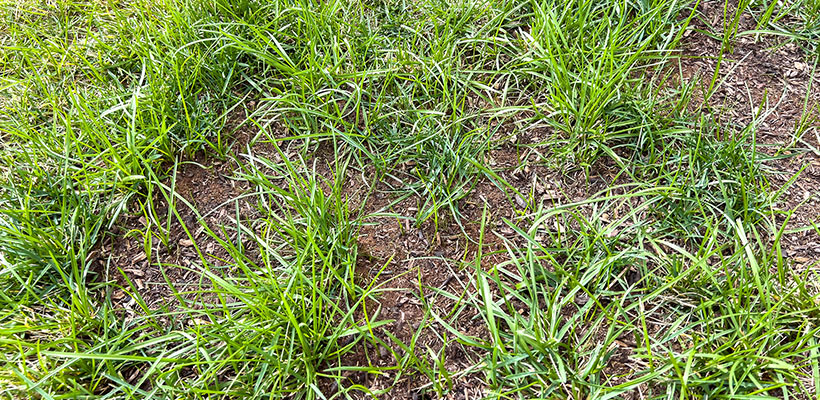
You can feed and water the lawn, but if roots are trapped in a shallow, compacted layer, the grass will never fully use what you give it. Addressing compaction does not mean fixing everything in March; it means recognizing the problem now and planning the right steps as conditions improve.
Addressing compaction does not mean fixing everything in March; it means recognizing the problem now and planning the right steps as conditions improve.
What to do right now (late winter and early spring):
1. Avoid the lawn while it is still soft and saturated.
When snow first melts, the top layer of soil will often be very soft. If you see your footprints filling with water or the ground squishes under each step, it is too early for lawn activity of any kind.
- Walking or playing on the grass can worsen compaction
- Keep vehicles and heavy equipment off the lawn
- Limit foot traffic in obvious weak spots
- Use sidewalks and driveways, not the grass
2. Wait to rake until the lawn can handle it.
While it's tempting to grab a rake as soon as snow disappears, raking too early on saturated, compacted soil can tear roots and thin the turf even more.
- Wait until the surface water has drained
- Wait until the ground feels firm
Then use a light rake to lift matted grass, break surface crusts, and let air in. This helps recovery without causing more damage.
3. Take notes on problem areas.
In the spring, you can identify your trouble spots while they are still obvious:
- Repeated puddling in the same low areas
- Hard packed paths where people or pets always travel
- Thin strips along drives and walks where snow piled
Make a quick sketch or take photos. These notes will help you decide where to focus aeration and possible layout changes later in the season.
Plan relief via aeration and overseeding.
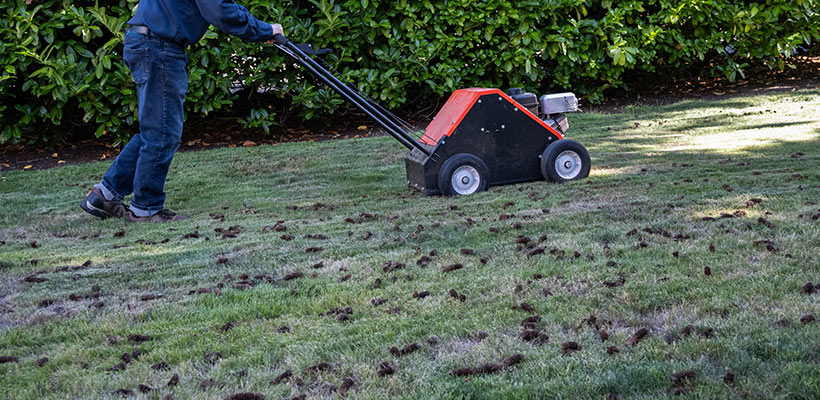
Late winter and early spring are not usually the time to run a core aerator. The soil is too wet and fragile. But this is the time to plan for it. In northern Illinois, core aeration often works best in early fall. Spring aeration can still help, but fall gives the lawn a more stable window to recover and build deeper roots.
Your plan might look like this:
- Use early spring to identify the worst compacted areas
- Protect those zones from heavy use as much as possible
- Schedule core aeration for the right window later in the year
- Pair aeration with overseeding to thicken turf where it is thin
By thinking ahead now, you avoid scrambling when the season is already busy.
Everyday adjustments to prevent repeat compaction:
While you are watching the lawn wake up, consider small changes that will pay off all year:
- Shift walking routes so that the same path is not trampled on every day.
- Move amusement equipment or dog runs a few feet each season
- Use stepping stones or a simple path where you know people always cut through
- Pile snow in different places every winter so the same areas are not crushed every time
These simple changes will keep one area from taking all the abuse.
When to ask for help:
When early spring arrives, look for these unsightly areas:
- Large sections of the lawn that are soggy or hard
- Your grass is taking longer to green than your neighbors'
- You have recurring thin or bare strips in the same places every year
What the LawnCare by Walter team can do:
- Confirm whether or not compaction is the main cause of your problems
- Recommend the best timing for aeration based on your lawn and soil
- Prioritize which areas to treat with aeration, overseeding and fertilization
Late winter and early spring are when compaction shows its unsightly self. If you pay attention now and plan your next steps, your lawn will have a better start in the growth season and make all the work you do later much more effective
 Max 6 min read